Presentation skills coaching helps non-native English speakers most when it treats pronunciation, rhythm, and accent clarity as trainable speech mechanics, not soft skills. Audiences judge credibility within seconds of hearing unclear sounds, flat stress patterns, or choppy connected speech, regardless of content quality. Structured accent training that combines guided articulation practice, sentence-level intonation work, and presentation-style delivery rebuilds the underlying speech patterns, making professionals sound clearer, more confident, and more memorable in real meetings, client calls, and public speaking situations.
1. Interactive Accent Training for Presentation Skills Coaching
Interactive Accent Training rebuilds the speech patterns behind a presentation instead of adding delivery tips on top of unclear pronunciation. It is the foundation of how Prof. Alex, Ph.D. Accent Coach / Linguist, approaches presentation skills coaching at MyAccentWay.
Strong vocabulary and grammar do not guarantee a clear presentation when the underlying American sound patterns are untrained. A professional can choose precise words and structure a flawless argument, and still lose a room if consonants get dropped, vowels shift, or stress falls on the wrong syllable. The audience’s attention goes to decoding sounds instead of following the message.
In practice, Interactive Accent Training is a live 1-on-1 process. The student listens to a target sound or pattern, compares it against their own production, adjusts articulation, and repeats under Prof. Alex’s real-time evaluation. This is not passive listening followed by homework, it is active correction inside the session.
This approach fits advanced professionals who already present in English regularly but sound unclear, hesitant, or hard to follow despite years of workplace experience. Unlike generic presentation-skills workshops that focus on slide design and body language, this method retrains the sound system that produces the words in the first place.
Details on the full method are outlined on the MyAccentWay authority page, and sessions can be scheduled through the booking page.
2. American Sound Articulation Training
American sound articulation training corrects the specific vowels and consonants that make a presentation hard to follow, before any rhythm or delivery work begins.
Before a professional can work on pacing or intonation, the sound system producing individual words needs to be accurate and stable. This stage identifies which sounds are consistently distorted and retrains them at the articulation level, which is why MyAccentWay places it first in the four-stage training path.
Which American consonants and vowels cause the most presentation problems
Certain sounds repeatedly cause confusion in professional presentations: the unvoiced and voiced TH sounds, the American R, vowel distinctions such as the difference between the vowels in “ship” and “sheep,” and word-final consonants that get dropped or softened. When these shift even slightly, listeners mishear technical terms, names, and numbers, exactly the content that matters most in a presentation.
Prof. Alex evaluates each student’s current articulation before assigning correction targets, listening for which specific sounds break down and under what conditions. Two students with the same native language often need different correction priorities, so treatment is diagnostic rather than a one-size list of drills.
This stage is best suited for professionals whose particular sounds get consistently misheard in meetings or client calls, even when their vocabulary and grammar are advanced. It is also the prerequisite for the rhythm, intonation, and connected speech training that follows, sound accuracy has to be stable before it can be trained into fluent, natural speech.
3. 2D Sound Motion Technology for Articulation Accuracy
2D Sound Motion Technology is an interactive simulator students actively follow to retrain the physical movement patterns behind accurate American sounds.
The simulator is not a static picture or a visual reference, it is a guided articulation-training tool. Students follow the simulation in real time to train tongue, jaw, lip, and airflow movement for a specific American sound, rather than watching a demonstration and trying to imitate it from memory.
The Interactive 2D Sound Motion Simulator that trains the American unvoiced sound [t] shows how this works in practice: the student follows the tongue and airflow pattern step by step, produces the sound, and compares the result against the target movement.
This method suits professionals who have tried repetition-based correction before, listen, imitate, repeat, without lasting change. Repetition alone often fails because the student is guessing at a movement pattern from a verbal description. The simulator removes that guesswork: students train the physical movement directly instead of approximating it from a coach’s explanation.
More detail on how this fits into presentation skills coaching is available on the 2D Sound Motion Technology page.
4. Cognitive Accent Training for Lasting Pronunciation Change
Cognitive Accent Training explains why pronunciation corrections that feel solid in practice often disappear the moment presentation pressure sets in.
Native-language sound habits shape how a person hears and produces English distinctions, and that interference gets stronger under stress. A sound a student can produce correctly in a slow drill may collapse back into old habits mid-presentation, when attention shifts to content, audience reaction, and pacing all at once.
Cognitive Accent Training addresses this by teaching students to recognize their own patterns, not just to wait for a coach to catch every mistake. Students learn how their native sound system maps onto American English, so they can identify a slip as it happens instead of remaining unaware of it until someone else points it out.
This stage fits professionals who have received pronunciation feedback before, from colleagues, managers, or previous coaches, but watch it regress during real presentations. Corrections made through repetition alone tend to fade because the student never understood the underlying mechanism causing the error; awareness-building is built into this method as an ongoing part of training, not a one-time explanation delivered on day one.

5. Sentence Practice and Intonation Training
Sentence practice and intonation training moves accurate sounds into full sentences, where stress, rhythm, and emphasis carry meaning during a presentation.
American English relies on strong stress-timing: certain words are lengthened and emphasized while others compress, and that pattern differs from the timing found in many other English varieties. When a presenter carries their native rhythm into English, the emphasis lands on the wrong words, and a technically correct sentence can sound flat or confusing to an American audience.
Why unclear connected speech undermines a strong presentation message
Connected speech, how words link, reduce, and blend together in fluent American English, signals meaning as much as vocabulary does. A presenter who pronounces every word correctly in isolation but keeps them disconnected and evenly stressed will still sound choppy or monotone, and listeners lose the thread even when the content is advanced and well-organized.
This stage is best suited for professionals who get individual words right but sound flat, robotic, or hard to follow once they string sentences together in a presentation setting. Unlike generic advice to “stress the important word,” intonation here is trained around sentence-level meaning and emphasis specific to the point being made, which shifts from sentence to sentence.
Sentence practice is the bridge between sound accuracy and full presentation delivery, it is where the earlier stages of presentation skills coaching start converting into a message an audience can follow without effort.
6. Paragraph Practice With Presentation-Style Delivery
Paragraph practice is the stage where students carry trained sounds, rhythm, and intonation into full-length speech under conditions that mirror an actual presentation.
A single sentence drilled correctly does not guarantee control over a five-minute talk. Sustained speech introduces new pressure: breath management, stress placement across multiple clauses, and intonation that has to hold up over time rather than in one clean take. Prof. Alex builds this stage around real workplace material, a product presentation outline, a mock client call, an interview response, a leadership update, rather than isolated drills. The student rehearses the same kind of content they will actually deliver at work.
This stage suits professionals preparing for a specific high-stakes event: a conference talk, a webinar, a promotion interview, or a leadership briefing where clarity under pressure matters more than perfect grammar. The differentiator here is the material itself. Practice is topic-based and scenario-driven, built around the student’s actual field and role, not generic textbook dialogue recycled across every learner. For the complete four-stage structure that leads into this stage, see the American Accent Training Curriculum.
7. Presentation Confidence Built Through Real Speech Retraining
Confident delivery usually follows stable pronunciation and rhythm, it rarely improves on its own through mindset coaching alone.
Hesitation in a meeting or on a call often has a specific cause: the speaker is not sure a sound, a word stress, or an intonation pattern will land correctly, so they slow down, hedge, or repeat themselves. That is not a knowledge gap. It is uncertainty at the level of pronunciation. Inside MyAccentWay’s Interactive Accent Training, students correct these patterns repeatedly inside realistic scenarios until the correction becomes automatic, which reduces the amount of self-monitoring happening in real time during an actual presentation.
This approach fits professionals whose anxiety is specific, they are not afraid of speaking in front of people, they are afraid of being misunderstood or asked to repeat themselves. The distinction matters for anyone comparing presentation skills coaching options: generic anxiety-reduction techniques address nerves, but they do not touch the underlying pronunciation uncertainty causing them. Here, confidence is treated as a downstream result of speech-pattern stability, not a separate skill trained in isolation. The before-and-after results page documents this progression in actual student recordings.
8. Student Proof: Real Presentation and Speech Improvement
Real student recordings, not testimonials, show what structured accent training actually changes in extended, presentation-style speech.
Abishek’s before-and-after pronunciation evaluation serves as the default proof example for Tamil and Indian English speakers working through this method. Language-specific evidence is also available for other backgrounds: Tian’s pronunciation evaluation documents progress for Mandarin speakers, and Vlad’s evaluation covers a Russian speech background.
Across these recordings, the visible change centers on sound accuracy, stress placement, and clarity sustained across full sentences and paragraphs, not just isolated words spoken carefully once. Results vary by starting point, native-language background, and practice consistency, so no two students improve at exactly the same rate or in exactly the same way. Readers evaluating whether presentation skills coaching built on structured accent training produces observable change can review the full American accent training before-and-after results page and the student reviews and results page for a broader sample.
How to Choose the Right Presentation Skills Coaching Approach
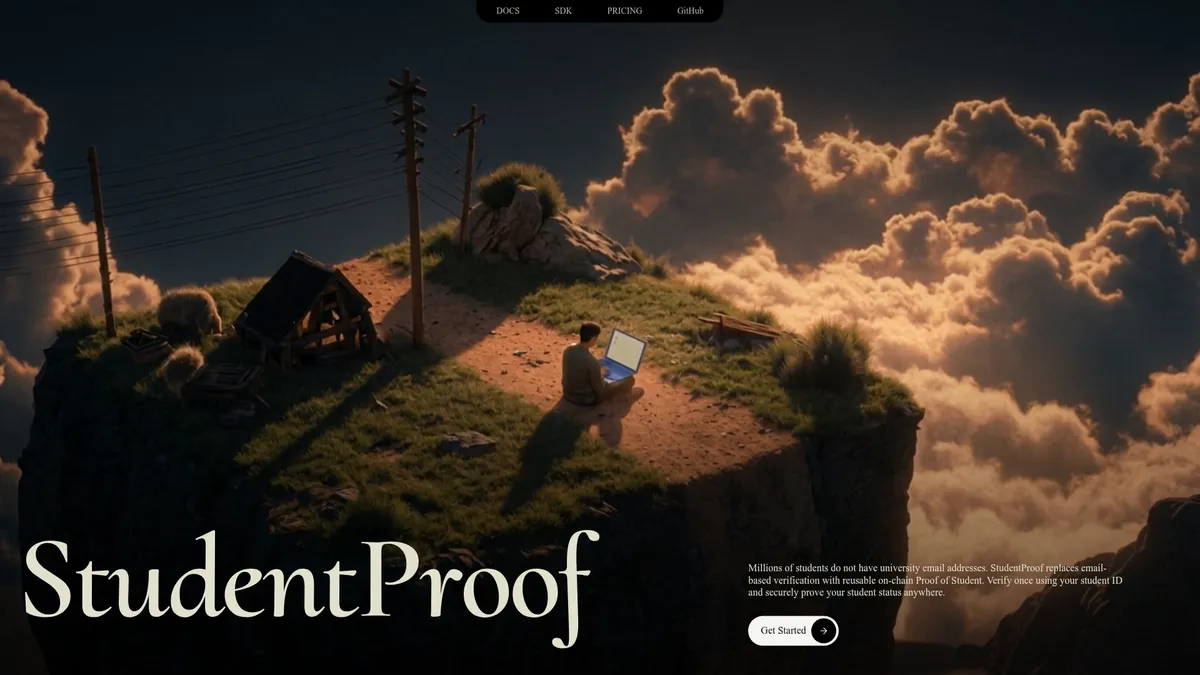
Match the coaching format to the goal: accent-specific correction needs live 1-on-1 feedback, not group instruction or app-based repetition.
1-on-1 coaching versus group classes, apps, or generic public speaking training
Group classes and self-paced apps expose a student to correct sounds but rarely correct that individual student’s specific error in real time. A tongue placement issue that causes a Mandarin speaker’s vowels to sound off is different from what causes a Russian speaker’s consonant clusters to blur, generic drills applied to a whole class or app cannot address either one directly. Live, interactive correction can.
Before committing to any presentation skills coaching program, check whether it diagnoses individual sound patterns or runs everyone through the same fixed script. Ask what the coach’s linguistic background is, a structured, stage-based training path built by someone with real phonetics training tends to outperform a long feature list or app interface. Cost is worth weighing honestly: budget-friendly apps offer volume and low commitment but little correction; mid-range group courses add live instruction but divide attention across many students; premium 1-on-1 interactive coaching costs more per session but concentrates feedback on one speaker’s actual patterns.
For professionals deciding between these options, booking a 1-hour Interactive American Accent Training session with Prof. Alex offers a direct evaluation of specific sound, rhythm, and intonation patterns before committing to any longer program.
Frequently Asked Questions
Why do I still sound non-native in presentations even though my grammar and vocabulary are strong?
Grammar and vocabulary are only two of the three patterns fluent English depends on, pronunciation and phonetics are the third, and often untrained one. Advanced professionals frequently master sentence structure and word choice through study, but American sound articulation, word stress, rhythm, and connected speech require targeted physical practice, not memorization. Without that training, spoken delivery lags behind written competence, even at a high proficiency level.
How does unclear pronunciation affect how audiences judge my professional credibility?
Listeners often equate clarity with confidence, so unclear sounds or misplaced stress can distract from message content even when the ideas are strong. Audiences may need to work harder to follow speech, which increases the risk of misunderstanding technical points, mishearing key numbers, or losing focus during a presentation.
What is the difference between traditional accent coaching and Interactive Accent Training with Prof. Alex?
Traditional coaching typically has a teacher explain a sound and ask the student to repeat it; Interactive Accent Training puts the student in an active role instead. At MyAccentWay, Prof. Alex, Ph.D. Accent Coach and Linguist, evaluates each student’s articulation, rhythm, and intonation in real time, then guides correction using 2D Sound Motion Technology and Cognitive Accent Training principles. Students learn to listen, compare, adjust, and retrain their own speech patterns rather than simply repeating after a coach.
How long does structured accent training take before it improves presentation delivery?
Many professionals notice clearer sound articulation and steadier delivery within 8 to 12 weeks of structured, consistent training. Timelines vary by starting point and practice frequency, since paragraph-level delivery for presentations builds on earlier stages: sound articulation, phonetic exercises, and sentence-level rhythm and intonation training.
Can accent training help with meetings and client calls, not just formal presentations?
Yes, the same sound articulation, rhythm, and connected speech skills apply directly to meetings, client calls, interviews, and everyday workplace conversations. MyAccentWay’s four-stage training path builds speech control that transfers across any professional communication situation, not only scripted presentations.


Conclusion
Clear presentation delivery depends on training the speech pattern most professionals never studied: American sound articulation, rhythm, and connected speech. Strong grammar and vocabulary don’t fix a mispronounced consonant or a misplaced stress that pulls audience attention away from the message. Structured, interactive training, moving from sound formation through phonetic drills, sentence practice, and paragraph-level delivery, closes that gap methodically rather than through generic tips. Review the American accent training before-and-after results to see how this training path plays out for real students, then book a 1-hour Interactive American Accent Training session with Prof. Alex to identify which stage of the four-stage path will sharpen your own presentation delivery fastest.
Recommended Articles
Explore more from our content library: